Little Altars
An essay by Indigo James
Before we curated our Instagram feeds, we curated our bedrooms. They were the first places many of us became artists. These bedrooms became little altars to the things we once loved: our plastic Bratz dolls, our GirlTech Password Journals, our beaded door curtains and our blu-tack’d postered walls. Trinkets handed down from our mothers or grandmothers sat alongside jewellery boxes with wind-up ballerinas.These bedrooms were our first acts of autonomy, before we learned to see ourselves through the eyes of others.
Girlhood is experienced from the inside out. Womanhood, on the other hand, often asks us to see ourselves from the outside in. In The Second Sex, Simone de Beauvoir described woman as “the Other,” defined not as an autonomous being, but in relation to man, “He is the Subject; he is the Absolute, she is the Other.” Perhaps this is the moment where shame begins; the moment we stop simply existing and begin imagining ourselves through the eyes of others.
We once waited eagerly for the arrival of womanhood, stuffing our pre-pubescent Bonds bralettes with socks, yearning for a future version of ourselves. Little did we realise what awaited us. We slowly begin policing ourselves, becoming criticallyaware of how we appear. The hair on our bodies is plucked, our stomachs held in as we step tentatively onto bathroom scales.
There are now rules that we must follow. We learn about body shapes to find out what looks ‘flattering,’ which really means what makes us look…not fat. Embrace your sexuality, sure but don’t flaunt it. Be cool Tumblr girl, nonchalant girl. Be girl who is perfect without any effort. We don’t want people to think we’re intentionally acting this way. No, this is accidental, this is just how we are.
But before these rules become ingrained in us, we exist within a space completely unaware of how we are perceived. It doesn’t occur to us that our obsessions, hobbies or bodies could be ‘cringe’ or ‘embarrassing’. This is the space before shame.
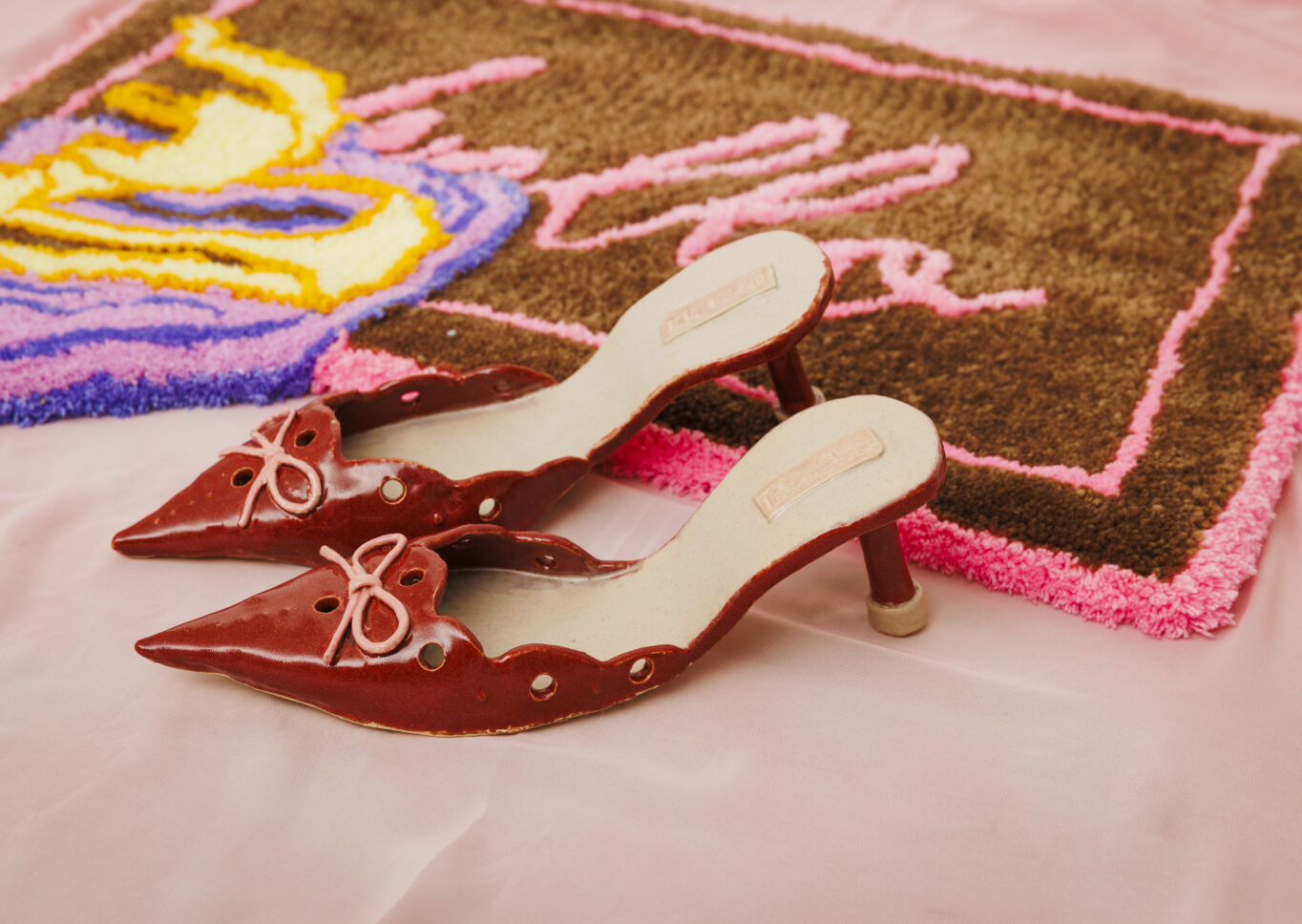
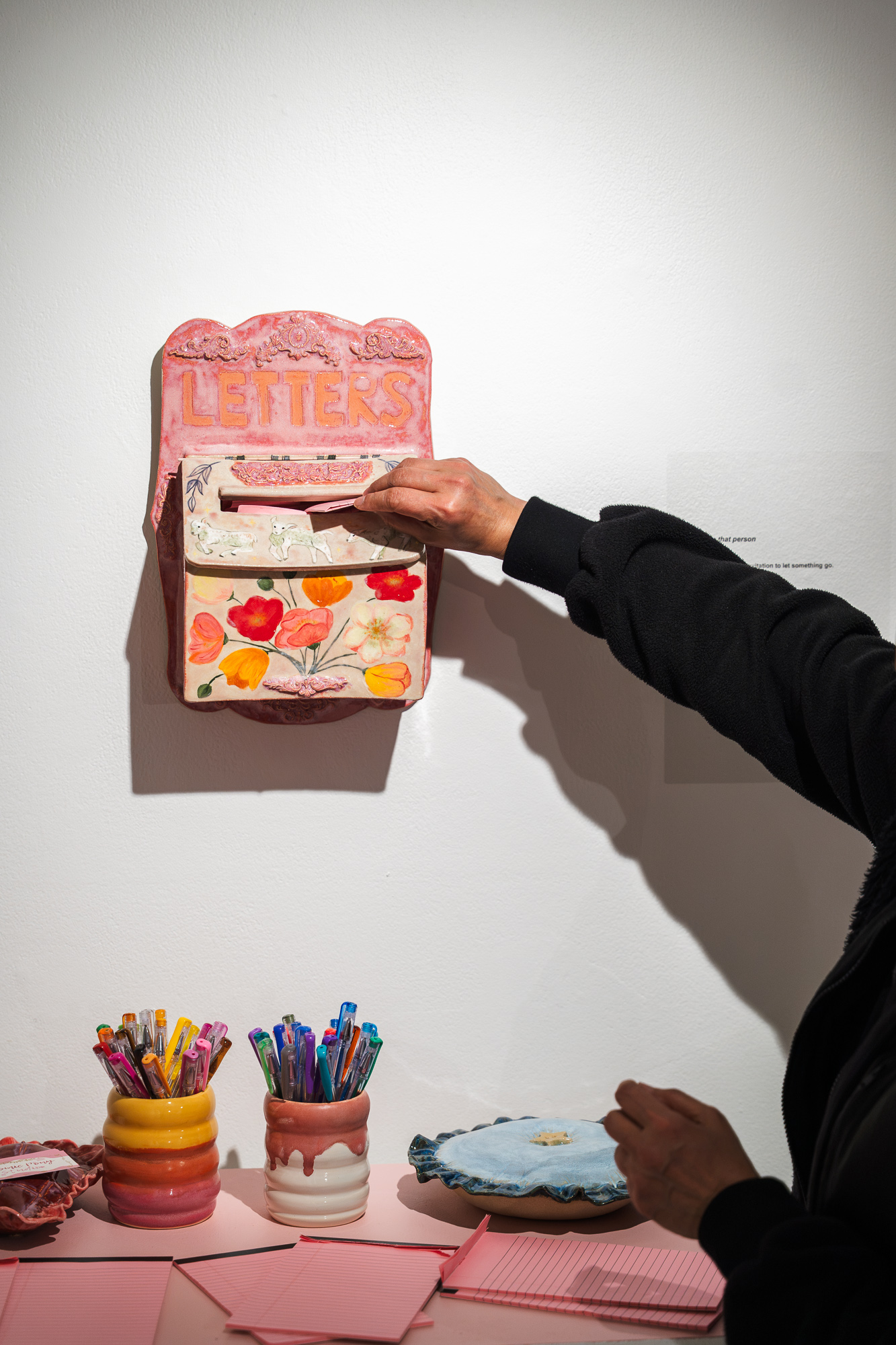
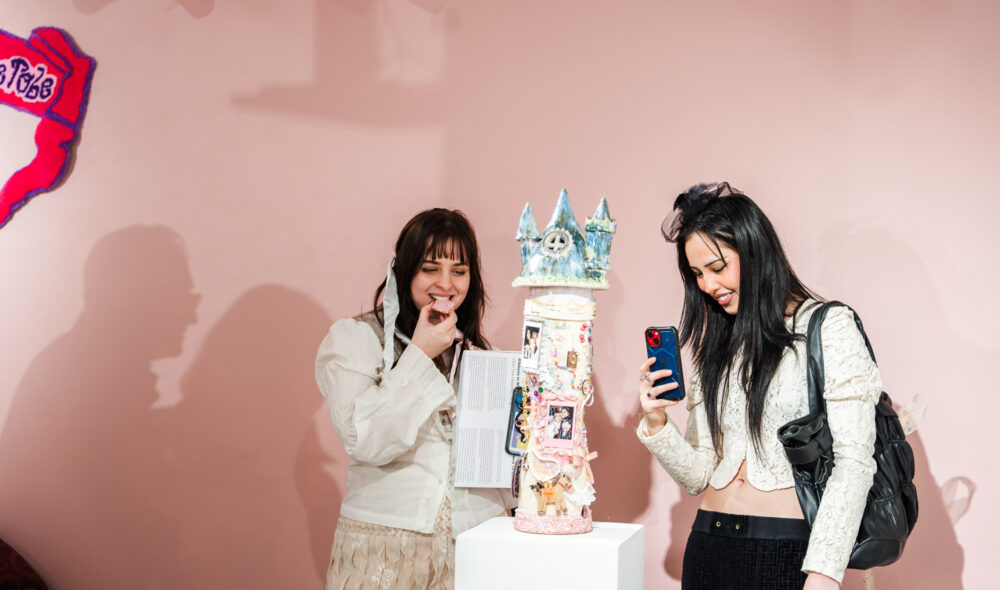
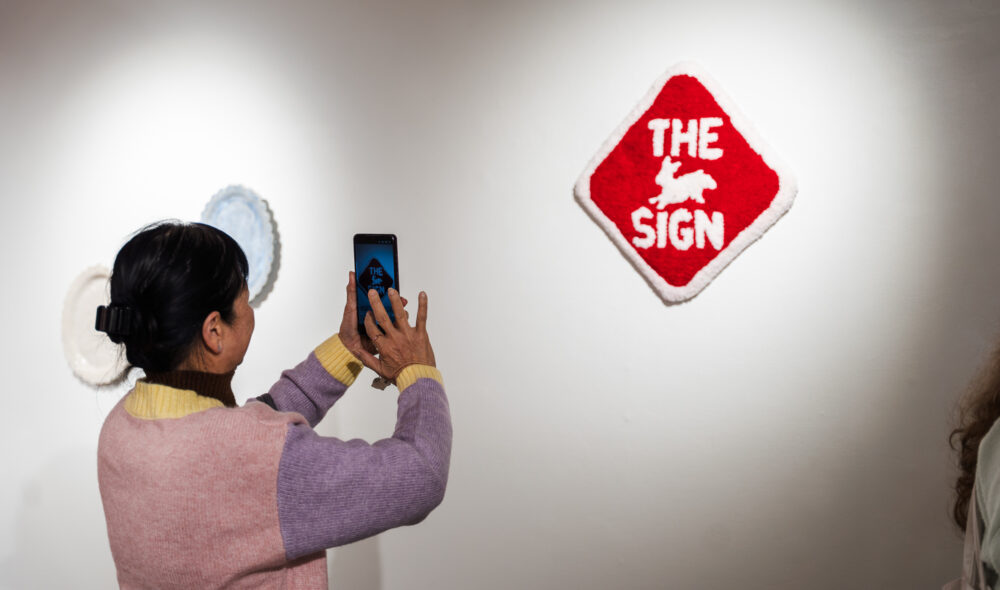
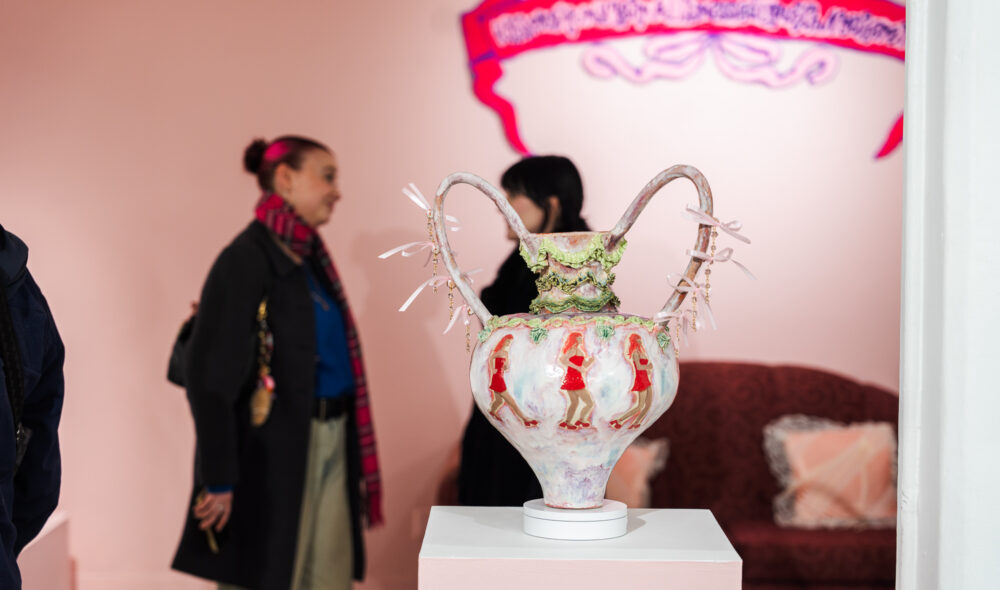
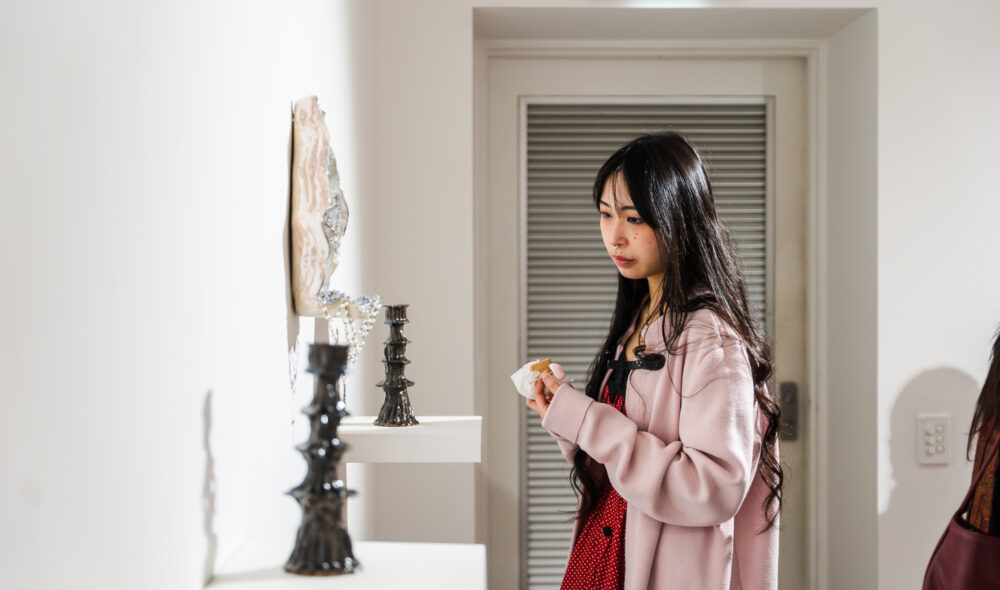
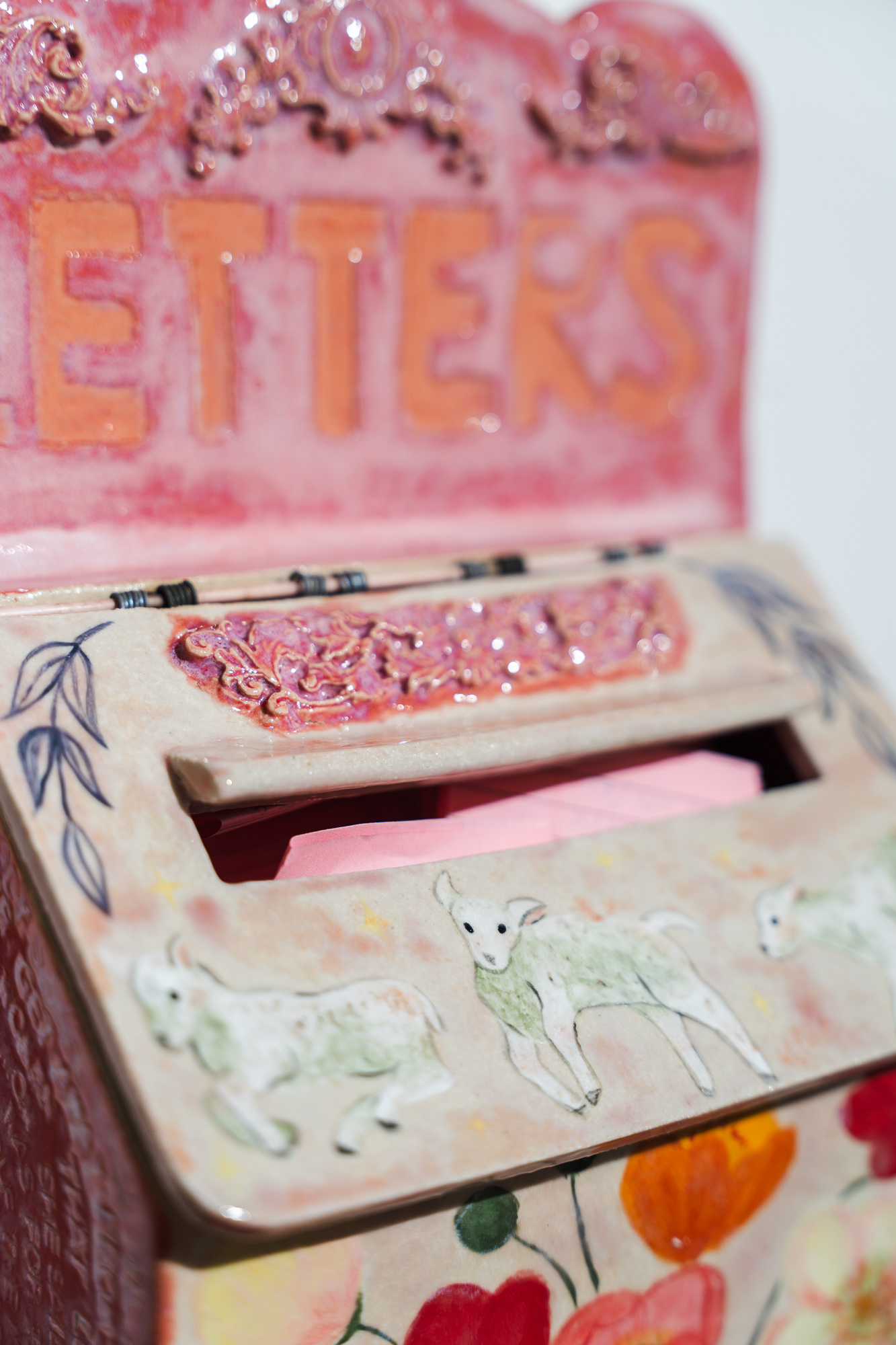
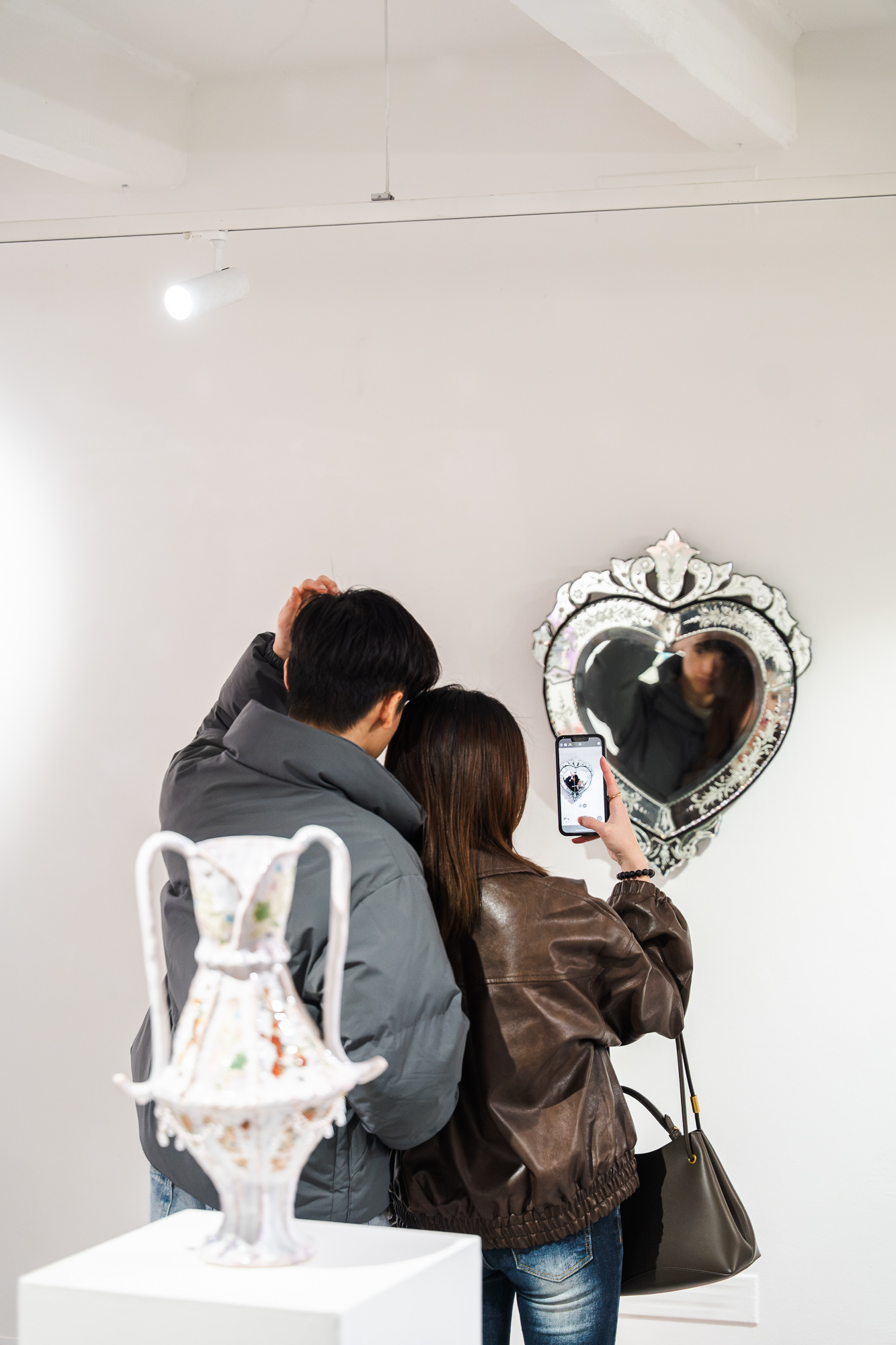
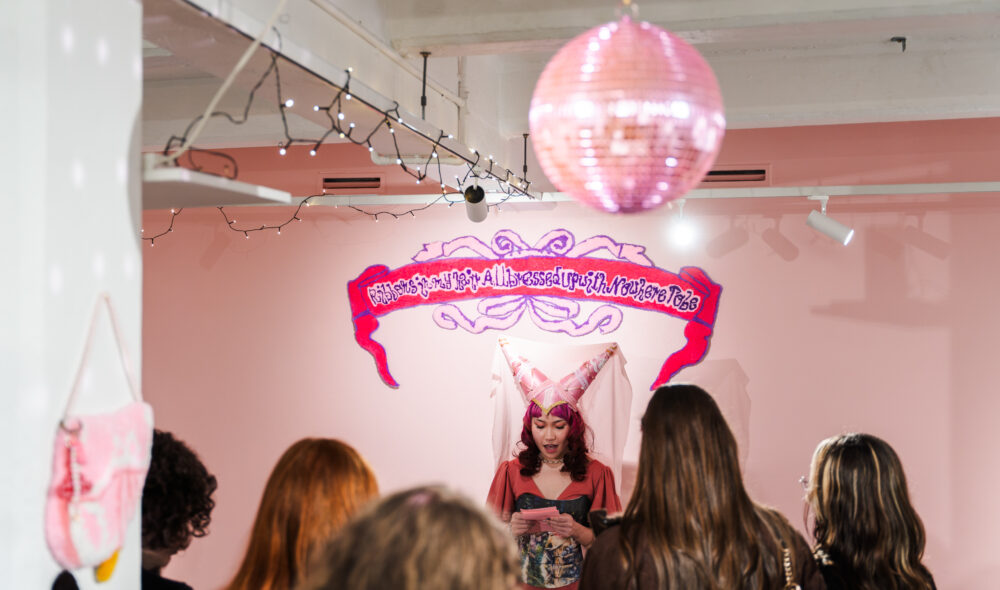
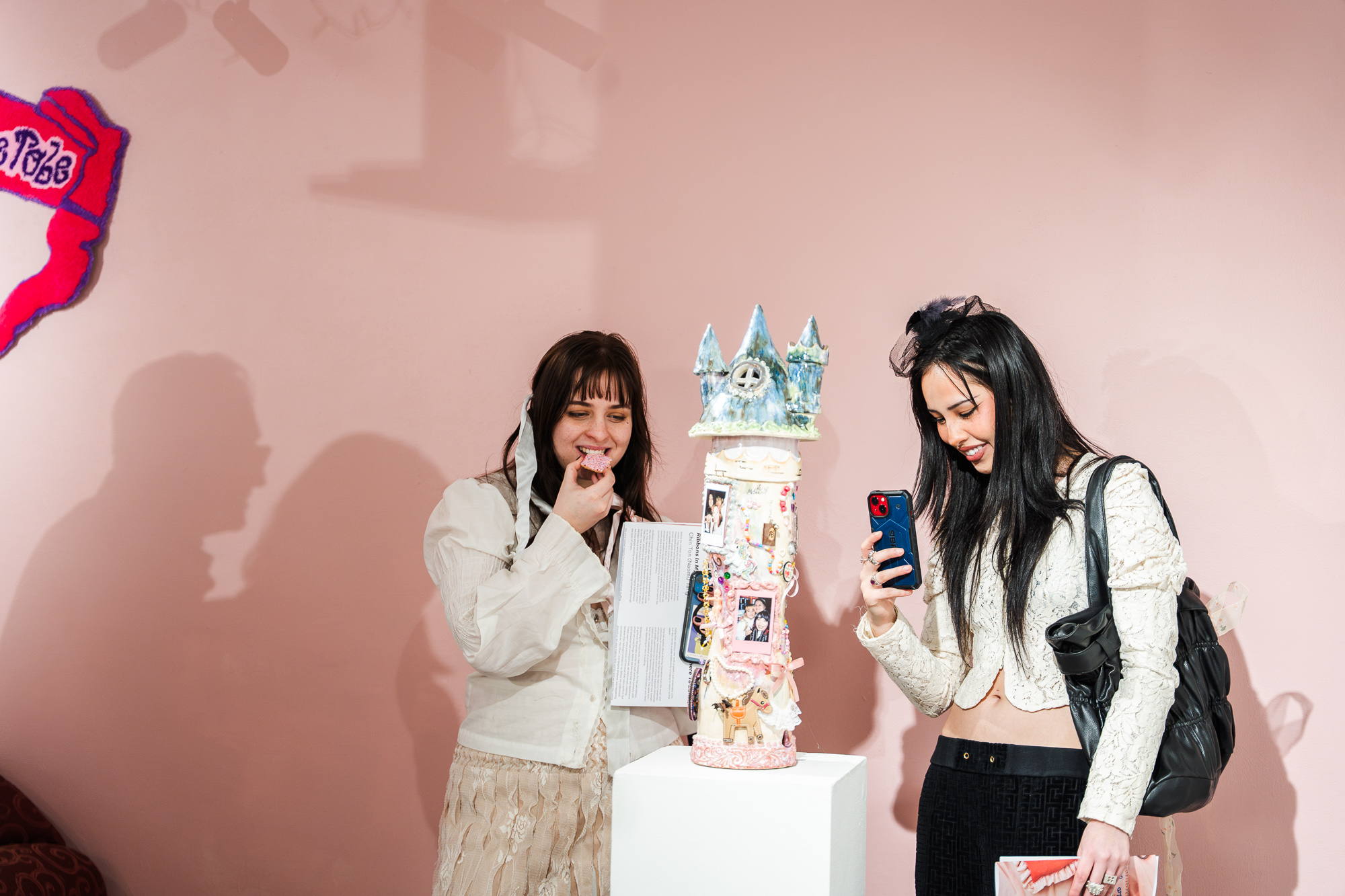
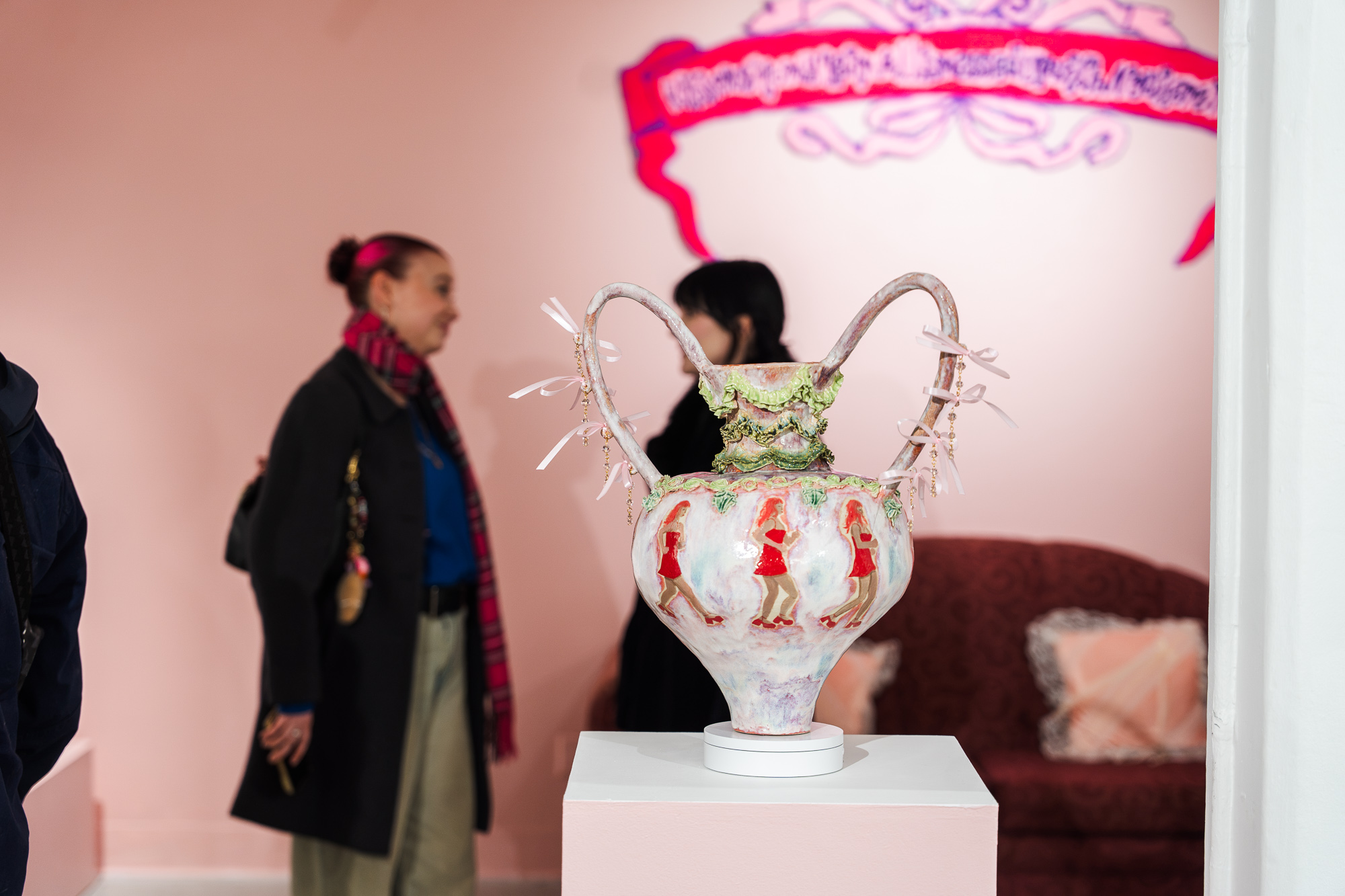
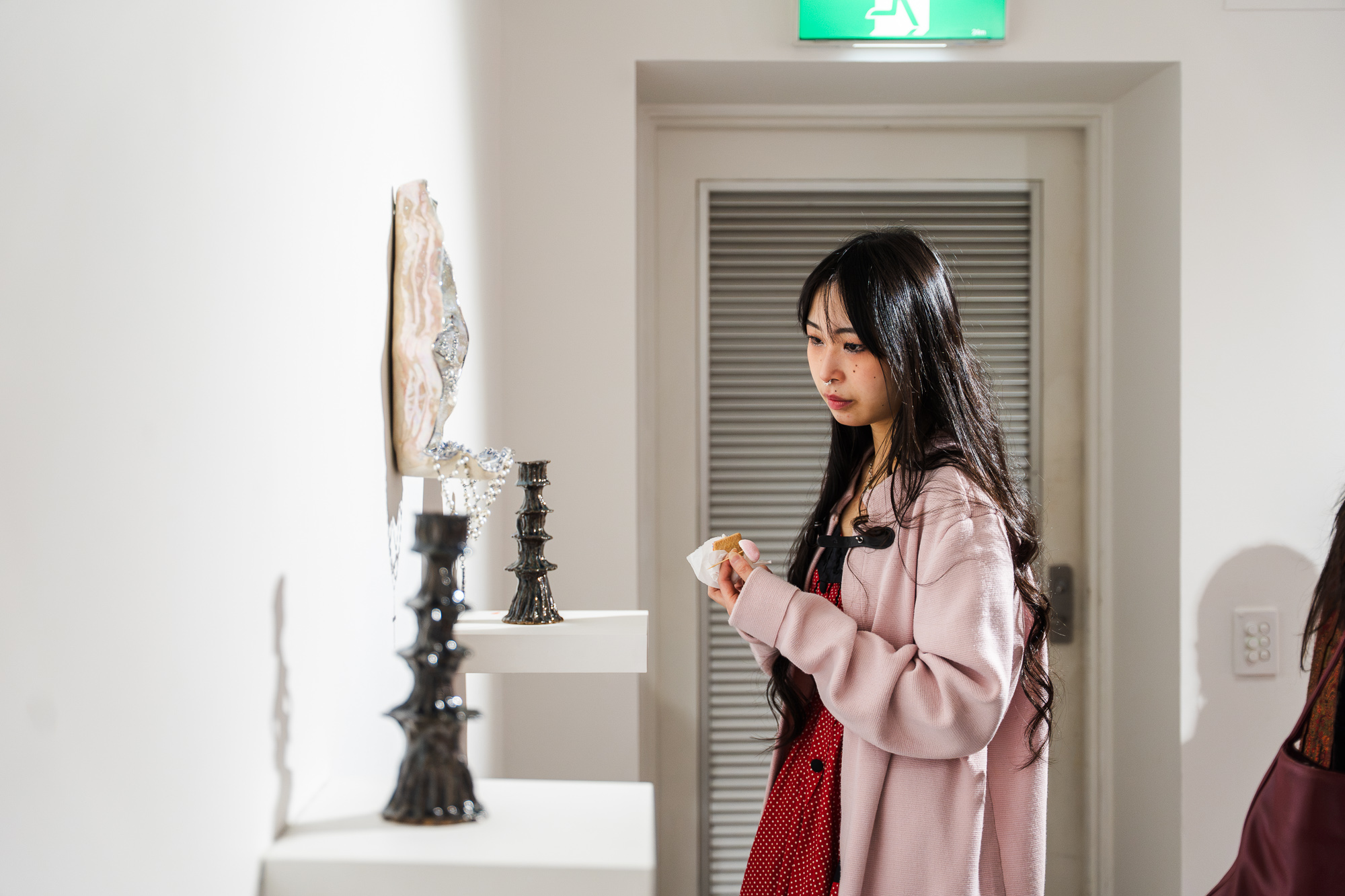
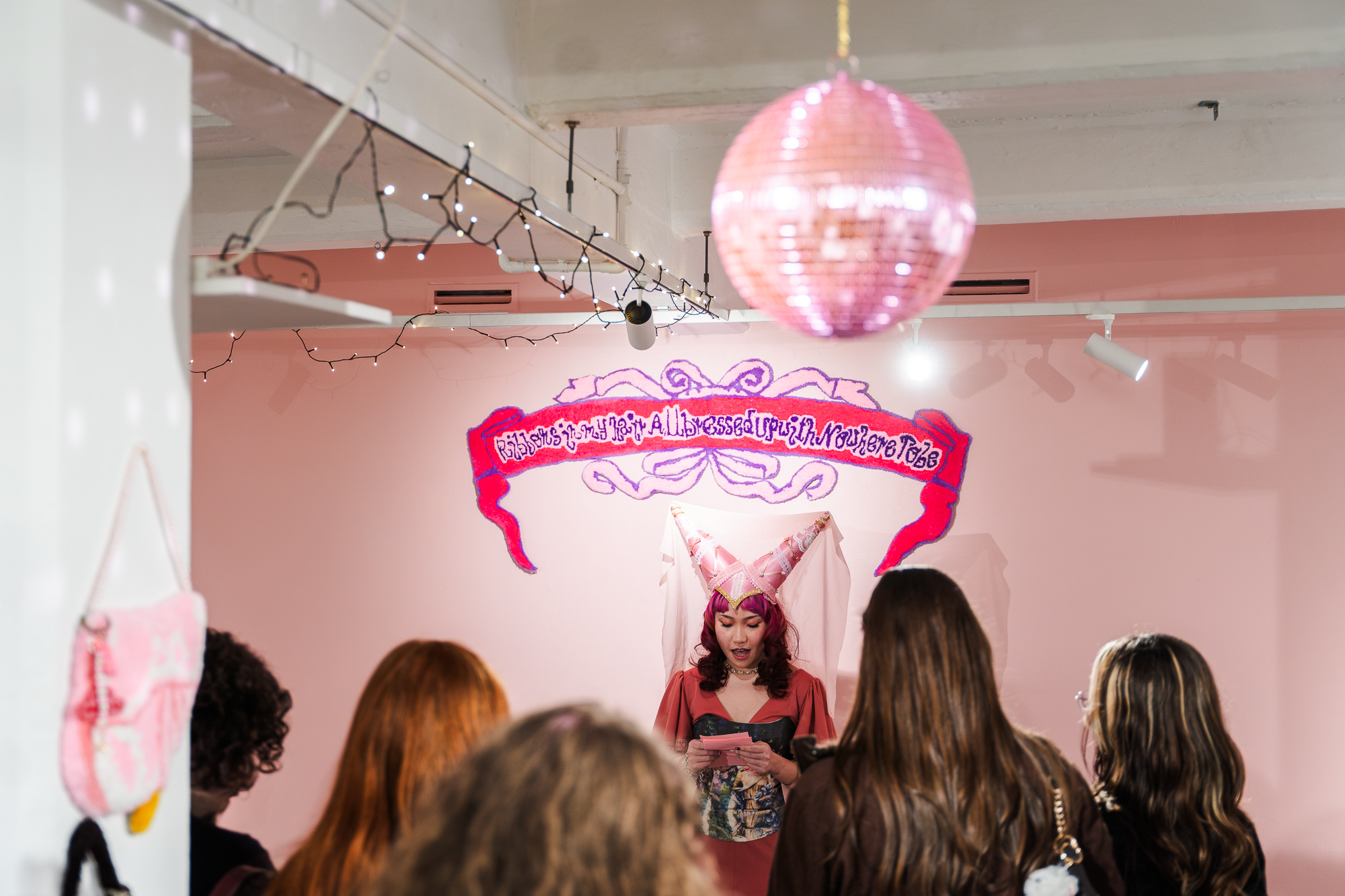
Chin Ton Naomi Tang’s exhibition, Ribbons in My Hair, All Dressed Up with Nowhere to Be, returns us to this space. Drawing inspiration from girlhood, nostalgia and the rituals of growing up, Tang creates a world of ceramics and textiles filled with ponies, pillows, kitten heels and castles. Pastel pinks, lilacs and butter yellows transform the gallery, where candle holders sprout cheeky handles and ribbons harden into clay without losing their delicacy. Her work is playful and undeniably cute, but also carries a quiet melancholy, a longing to return to that space.
Tang has spoken about drawing inspiration from the music and costuming of contemporary pop figures like Sabrina Carpenter, whose hyper-feminine visual world of bows, babydoll silhouettes and cheeky performances of desirability reveal just how complicated our relationship with femininity remains. The same symbols can be celebrated as empowering or criticised as anti-feminist depending on who is looking.
Reflecting on Tang’s work, I feel nostalgic for the sacredness of girlhood, the private worlds we built and the certainty with which we loved things. Before we learned that our appearance and behaviour had consequences, we were simply creating. These years were precious not because they were perfect, but because they belonged entirely to us. Before we understood ourselves as “the Other,” and despite whatever was happening around us, we were making little worlds and we were the centre of them, without wondering how they looked from the outside.
Visiting Tang’s studio felt like stepping into one of these worlds. I was struck by the contradiction; clay, one of the hardest materials, is transformed into the softness of ribbons and lace. By preserving these objects and making them imperishable, Tang transforms the temporary into something enduring. Girlhood obsessions are often considered phases to grow out of and leave behind, but through ceramics these once fragile symbols become objects that can survive.
Perhaps we didn’t abandon girlhood. Perhaps we abandoned the permission that it gave us to exist from the inside out. Tang’s exhibition offers that permission back. She preserves the girl who created without hesitation, the girl who curated little worlds, and reminds us that she was never someone we had to leave behind.