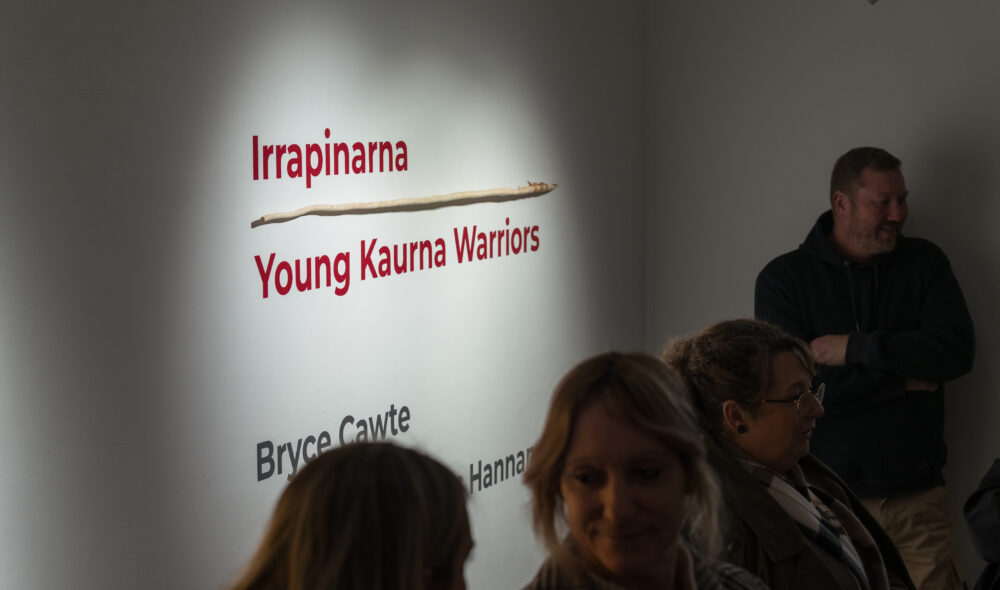
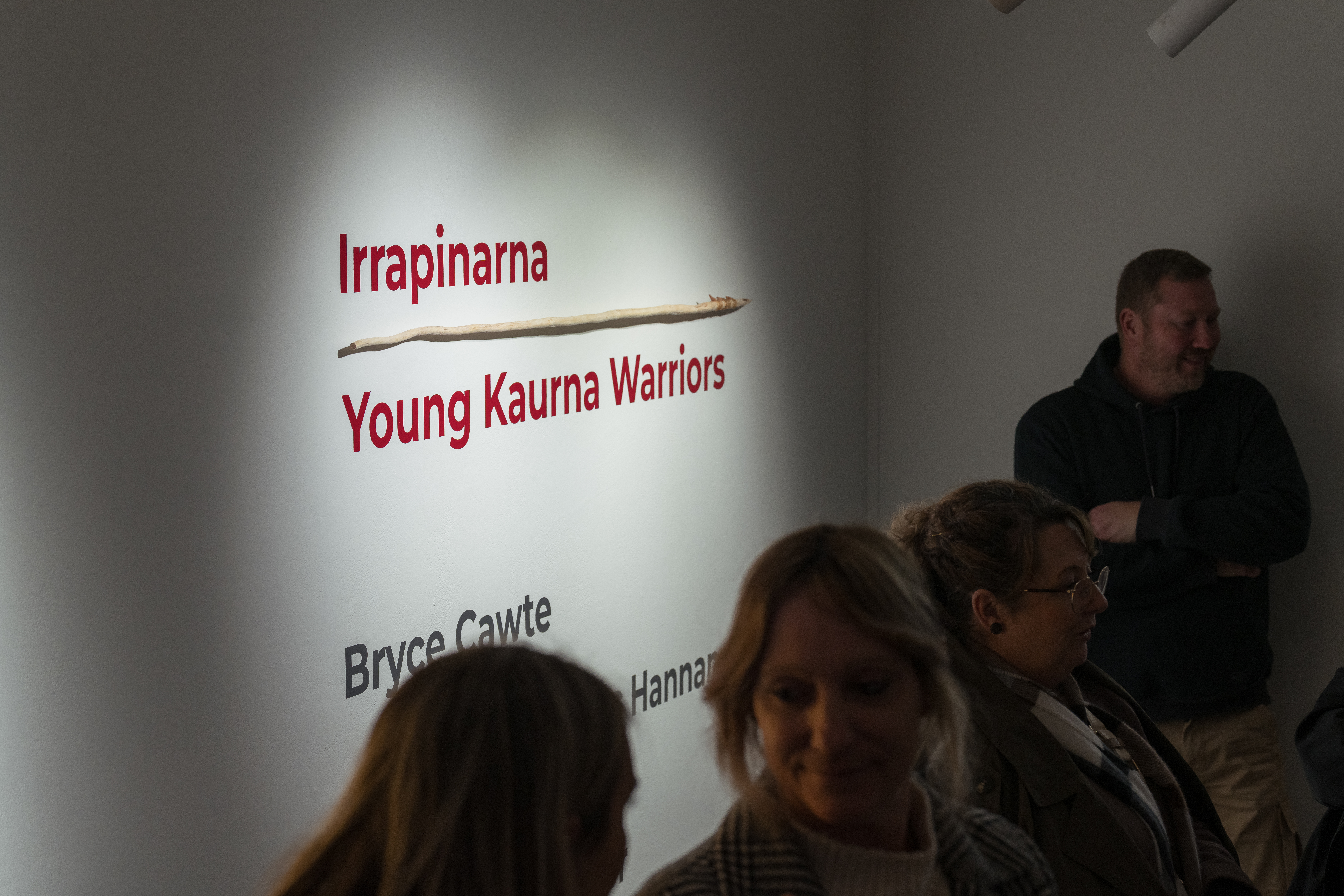
Irrapinarna Young Kaurna Warriors
Essay by James Tylor
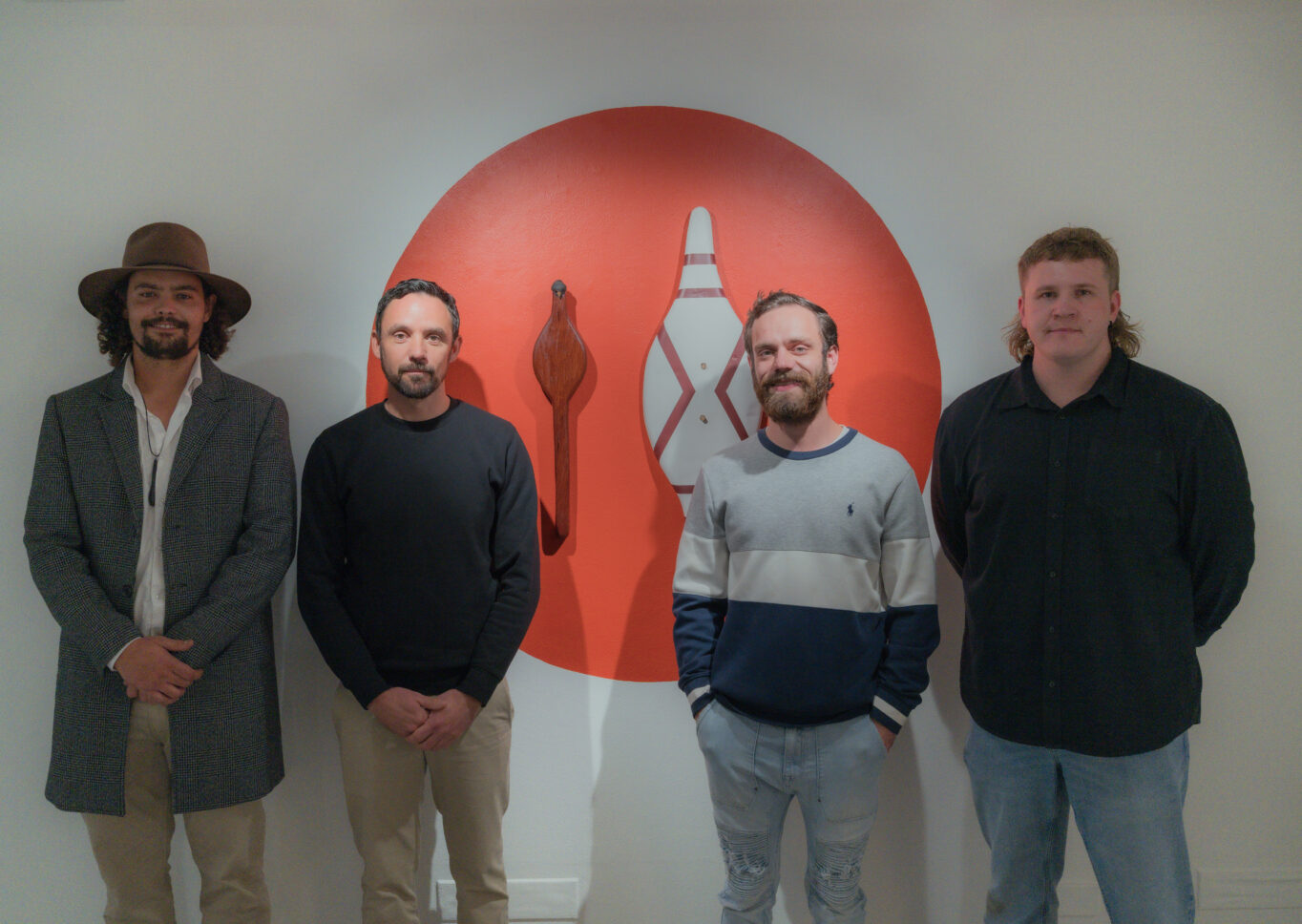
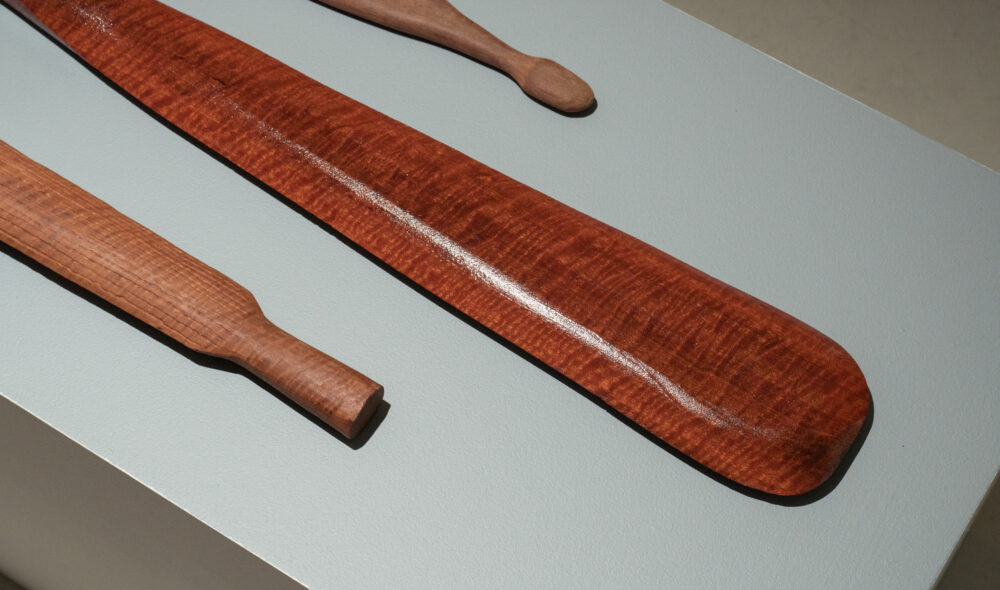
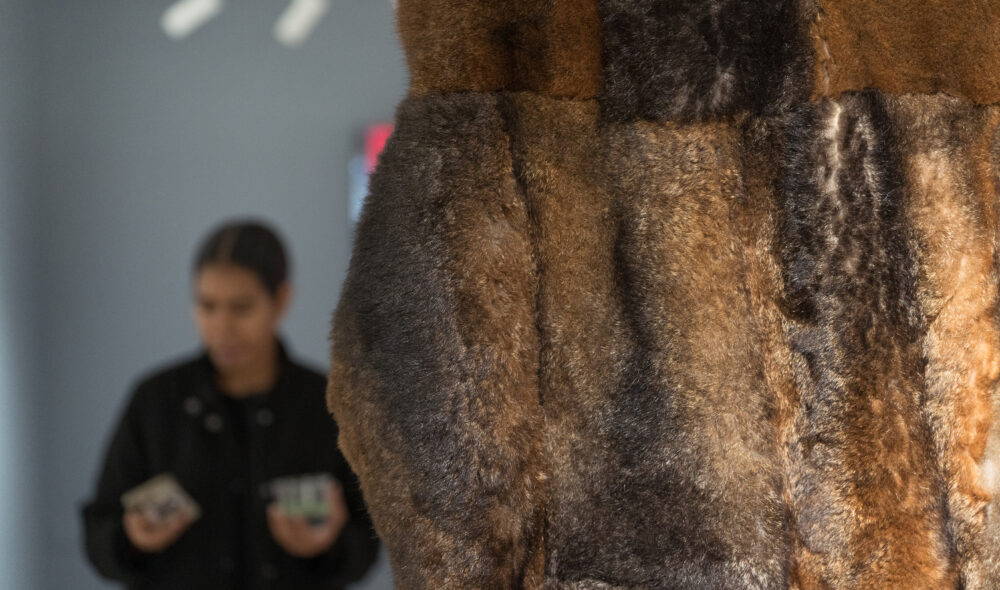
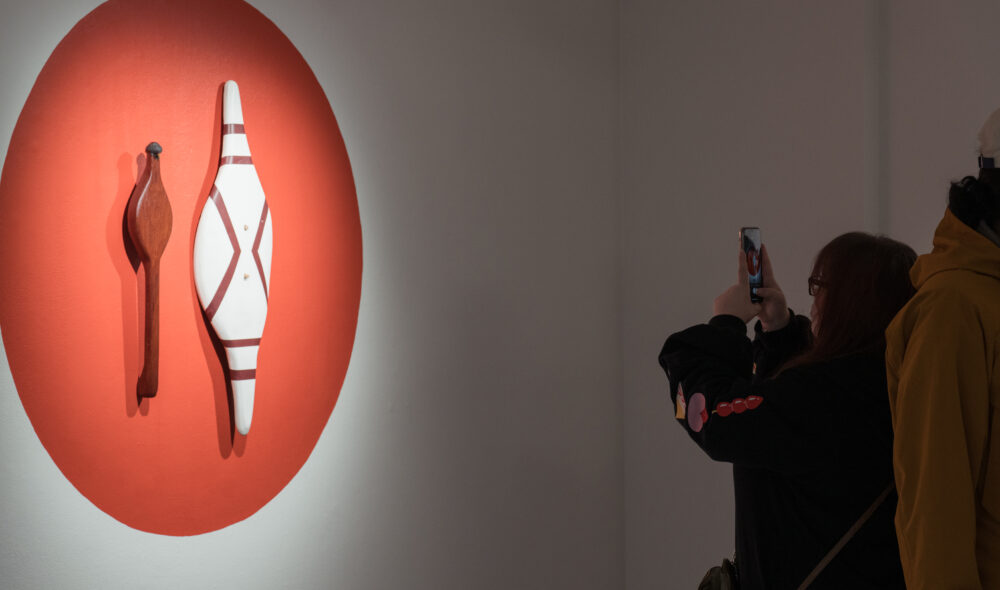
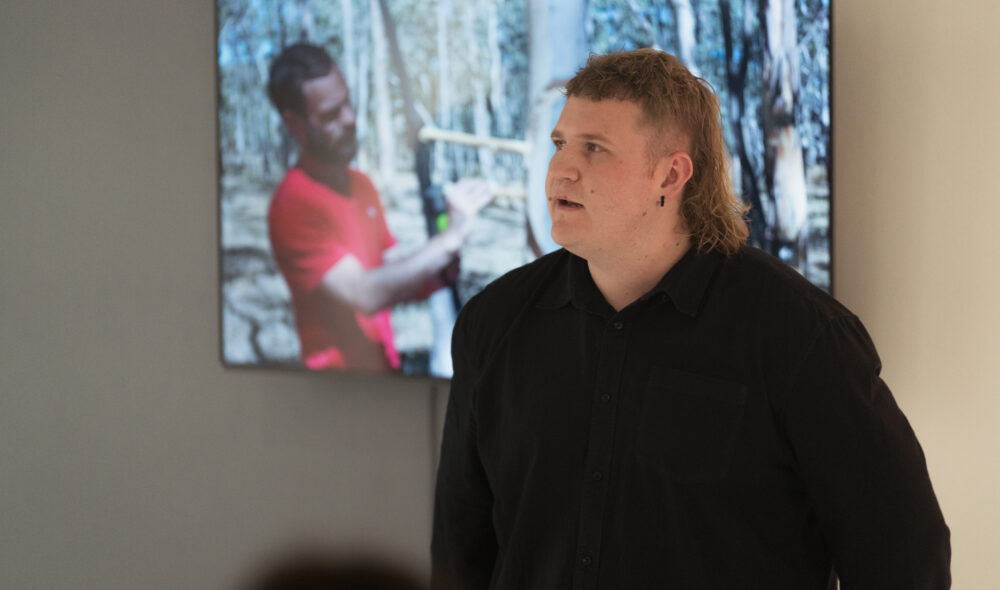
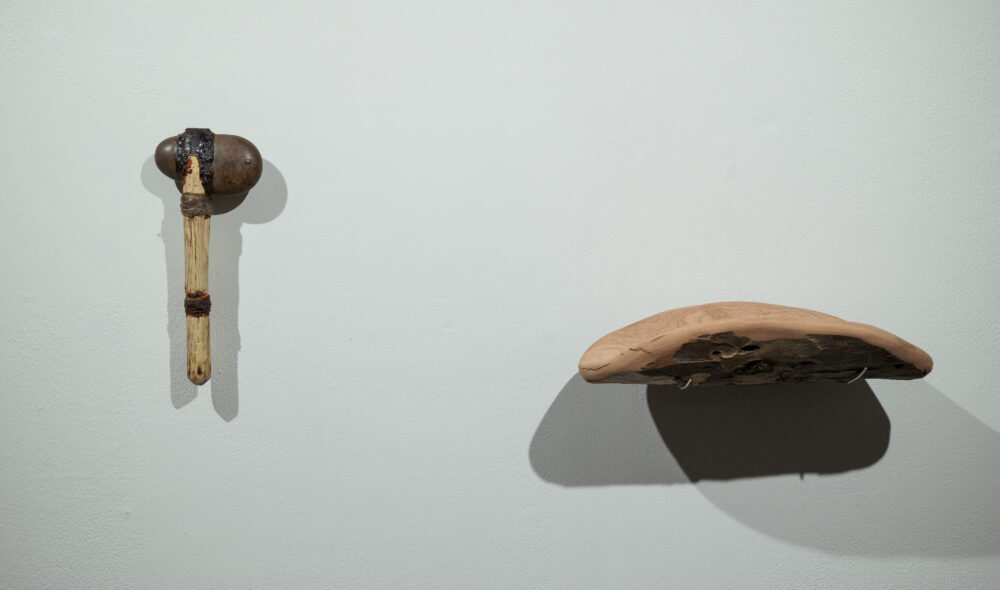
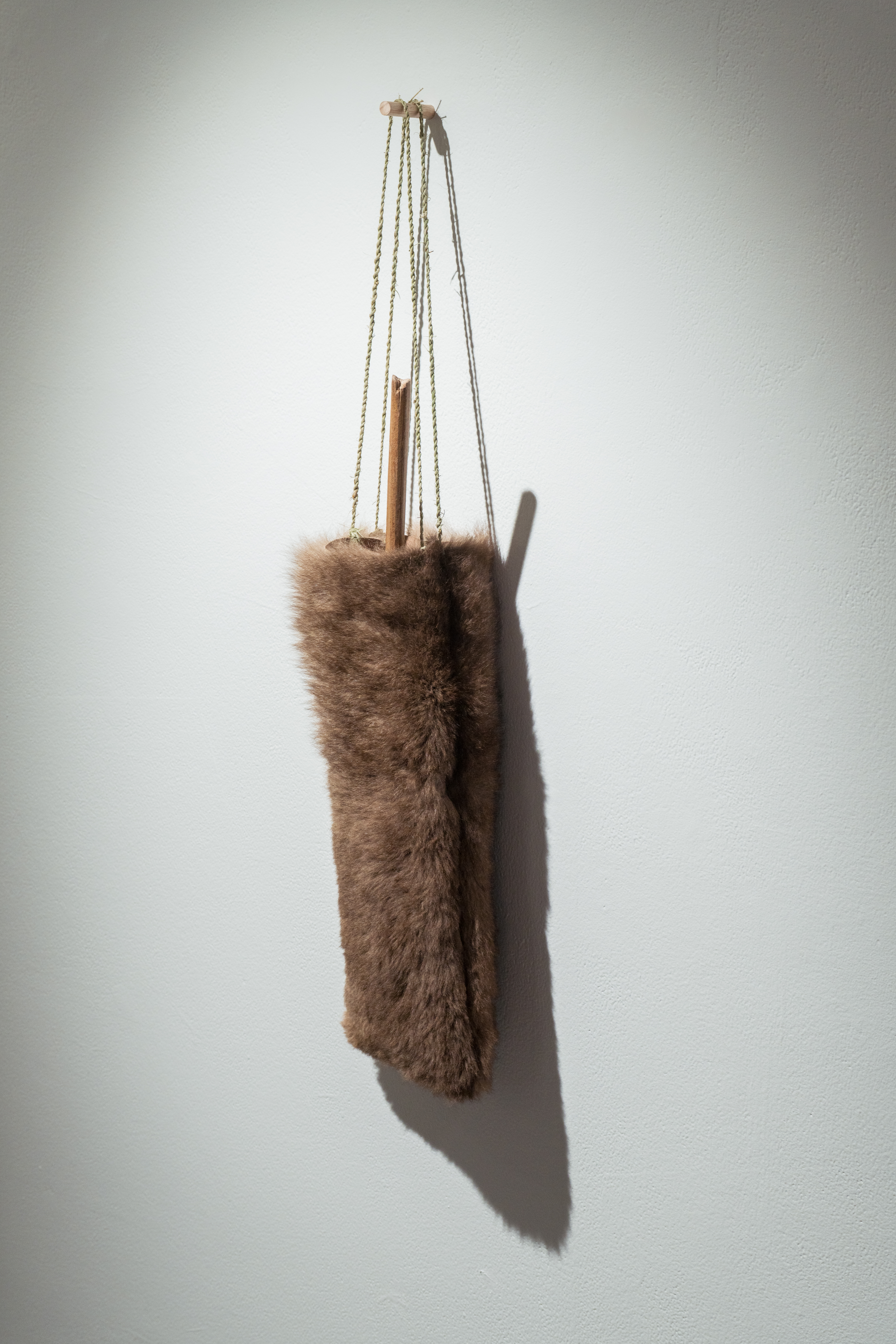
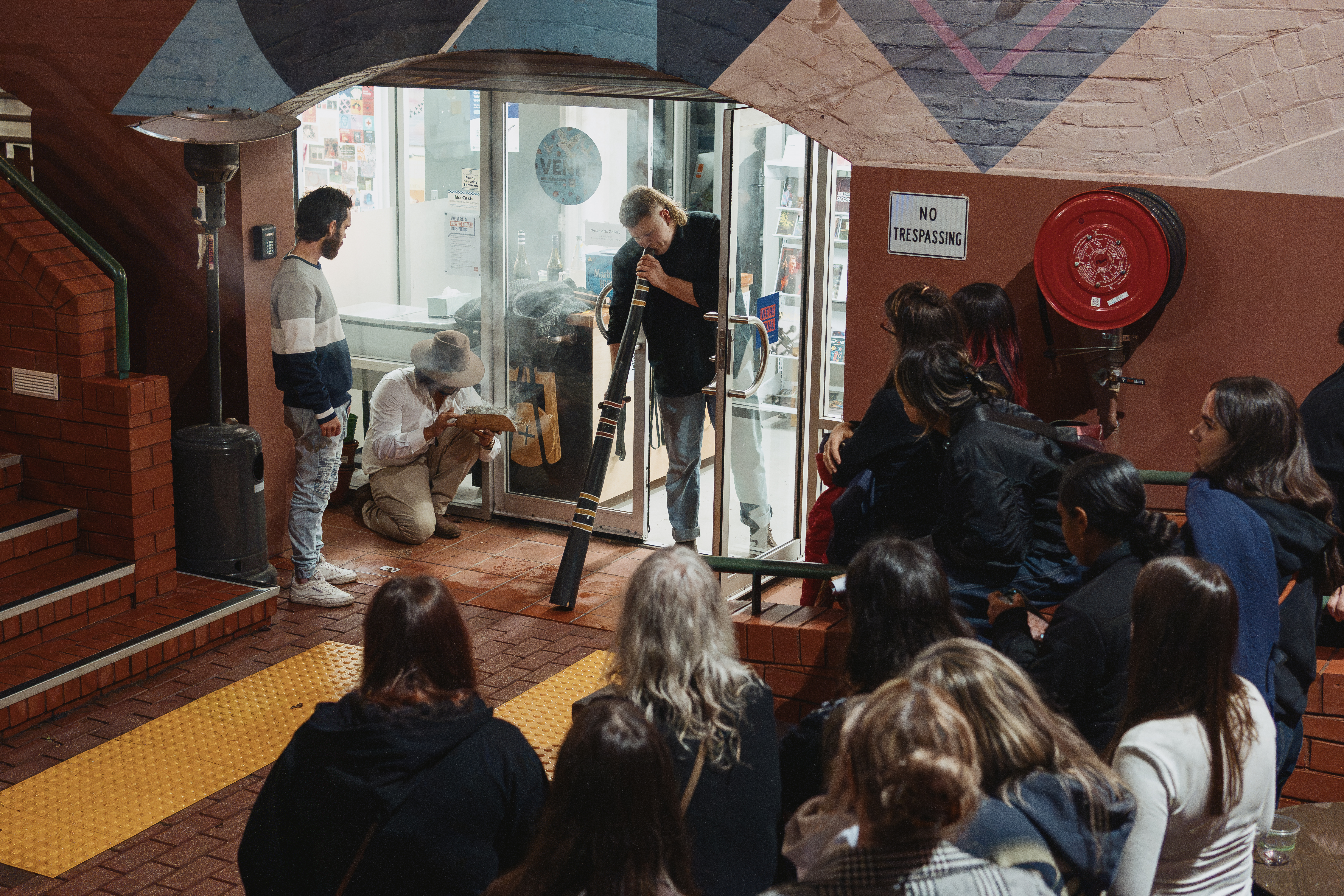
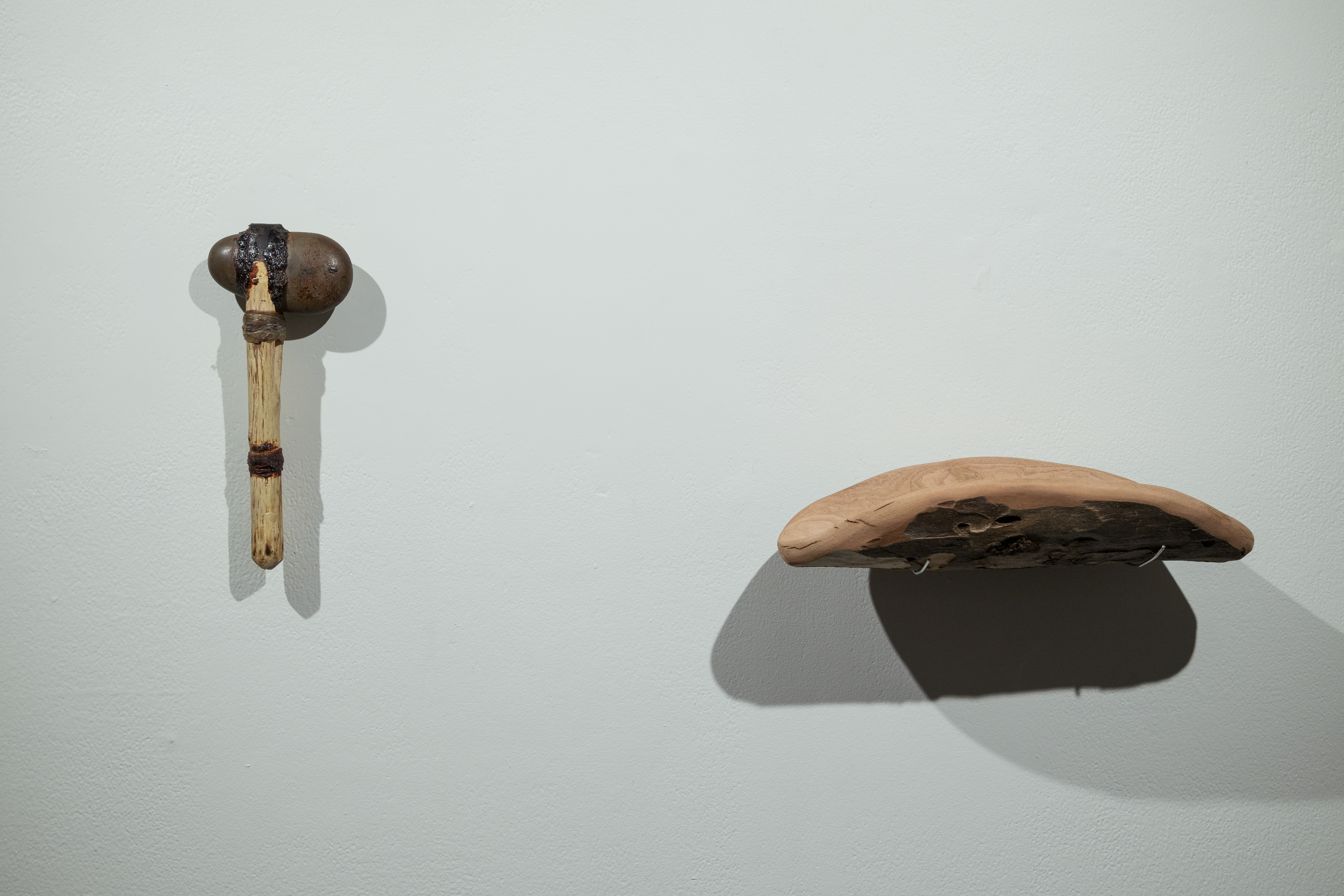
Irrapinarna Young Kaurna Warriors is an exhibition of Kaurna cultural tool-making by three young Kaurna men, Drew Kilner, Isaac Hannam, and Bryce Cawte. These men carry Kaurna cultural knowledge that has been passed down to them over thousands of years by their families, despite 190 years of British colonisation. Through this exhibition, they present the cultural knowledge that has been passed down to them.
Kaurna people have practised culture on Kaurna Yarta for over 43,000 years. Mudlarna tools have evolved over thousands of generations of Kaurna refinement, shaped by the environment and the community’s cultural needs. While Kaurna people share some tools with neighbouring groups, they also have unique tools used only on Kaurna Yarta. The Kaurna culture began to change about 190 years ago with the introduction of European culture.
The British colonised Sydney in 1788, then spread across southern Australia, Tasmania, Bass Strait, and Western Australia. Whalers and sealers began hunting in the Southern Ocean along the coast of Southern Australia. In the early 1800s, European whalers and sealers began visiting Patpa Yarta Fleurieu Peninsula, Kangaroo Island Karta Pintingga and Wirramu Encounter Bay on Ngarrindjeri Ruwi. European whalers often employed or enslaved Kaurna and other Aboriginal people to work on whaling ships along the coasts of Australia, New Zealand, Southern Africa, and Southeast Asia. The interaction of whalers with Kaurna influenced Kaurna language and introduced the Kaurna people to European metal tools for the first time.
In 1836, the British colonised the Kaurna nation at Patawilya Glenelg, Tarntanya Adelaide, and Yartapuulti Port Adelaide. In 1838 Kaurna people were removed from their land and taken to Pirltawardli, an Aboriginal mission located in what is now Possum Park in the Adelaide Park Lands, adjacent to the Adelaide Gaol. A second mission, called Native School Establishment, was later established next to the military barracks, behind the present-day South Australian Museum. It was at Pirltawardli that Kaurna culture and language were recorded by German missionaries and British colonists. However, these missions were designed to racially segregate Aboriginal people from British colonists and to suppress and replace traditional Kaurna life with British culture, the English language, and Christianity.
After the closure of the Pirltawardli mission in 1845, and the Native School Establishment in 1851 in Adelaide, Kaurna people were relocated to Poonindie Mission near Port Lincoln on Barngarla Country, and later to Point Pearce and Raukkan Point McLeay. The mission system in South Australia was developed to racially segregate Aboriginal people from the white colonist population that had taken their land. Missions acted as western training institutions where inter-racial Aboriginal-European children were trained as domestic servants and later removed from their Aboriginal families to work as servants for white families in South Australia. This system now contributed to what is now recognised as the Stolen Generations and domestic servitude. This mission system led to the decline of Kaurna cultural practices and tool making over about 130 years.
The 1967 Referendum became a major symbolic turning point in the struggle for Aboriginal people against racial discrimination in Australia, and this led to the closure of Aboriginal missions in South Australia. During the 1970s, Kaurna people began returning to Adelaide to live and work. In the 1990s, Kaurna people began reviving language, culture, and community life. This cultural and language revival was led by people including Paul Dixon, Alitya Rigney, Lewis O’Brien, Georgina Williams, Stevie Goldsmith, Frank Wanganeen, and Major Sumner, among many others.
These young men began learning Kaurna cultural practices and tool-making from elders in their teenage years, including Uncle Moogy Sumner, Michael O’Brien, Frank Wanganeen, Allan Sumner Trevor Bromley, and David Pearce.
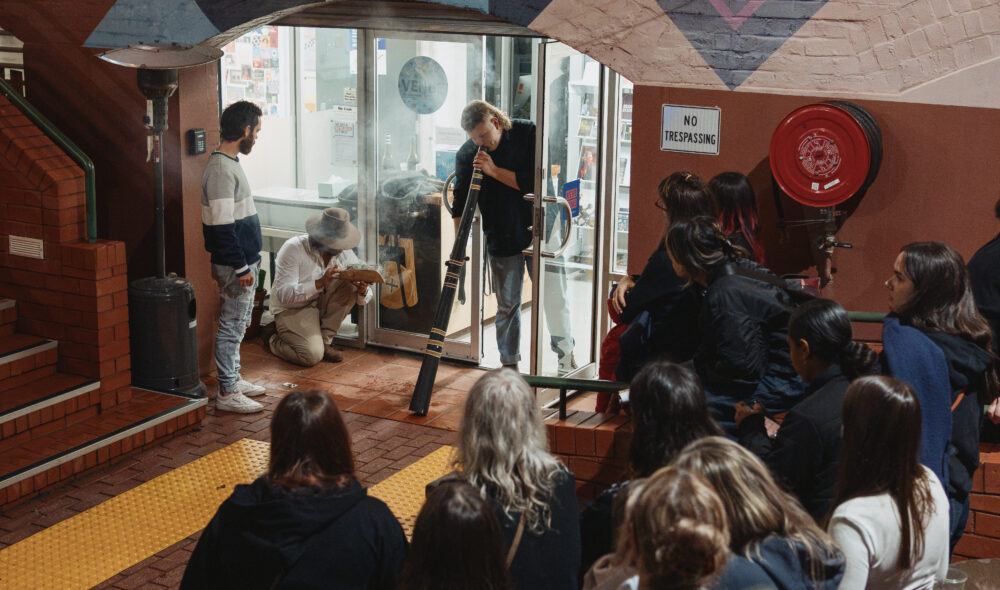
Drew Kilner, Isaac Hannam, and Bryce Cawte were all raised learning Kaurna culture from a young age under the guidance of their aunties, uncles, and elders. They have each pursued careers in cultural education and public cultural practice, including Welcome to Country and community education.
Drew Kilner runs a cultural business called Walking Together with Kaurna, teaching school children about Kaurna culture. He has also been involved in Kaurna repatriation and fire management work. Bryce Cawte has recently launched his own cultural business, Tarnta. Isaac Hannam is well known for his high-profile Welcome to Country. He also quietly works in community outreach programs in youth and adult justice system, and currently works in Aboriginal youth crisis accommodation.
These young men also carry family responsibilities. Isaac Hannam has a young daughter, and Bryce Cawte has a young son. Both share Kaurna culture with their children. Although Drew Kilner does not yet have children, he teaches Kaurna culture to school students. For all three men, it is important to pass Kaurna culture on to the next generation. They are emerging cultural warriors leading the next generation of Kaurna cultural revival.
In Irrapinarna Young Kaurna Warriors, tool-making becomes more than the creation of cultural objects; it is an act of cultural continuity, survival, and renewal. Through the work of Drew Kilner, Isaac Hannam, and Bryce Cawte, Kaurna knowledge that once faced suppression under colonisation is being reclaimed, practised, and shared with future generations. The exhibition reflects not only the strength of Kaurna culture across thousands of years, but also the responsibility carried by young Kaurna men today to continue the work of cultural revival. Irrapinarna stands as a testament to the resilience of Kaurna people and the enduring connection between culture, community, Country, and identity.