Artists and Programs/
Artist Interview – Where Water Meets
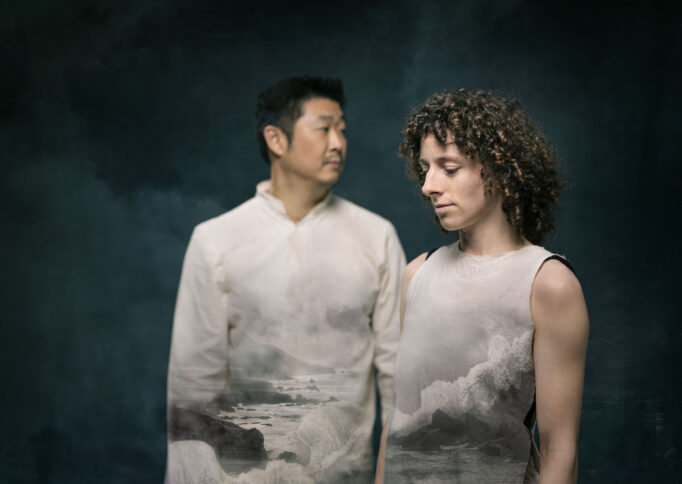
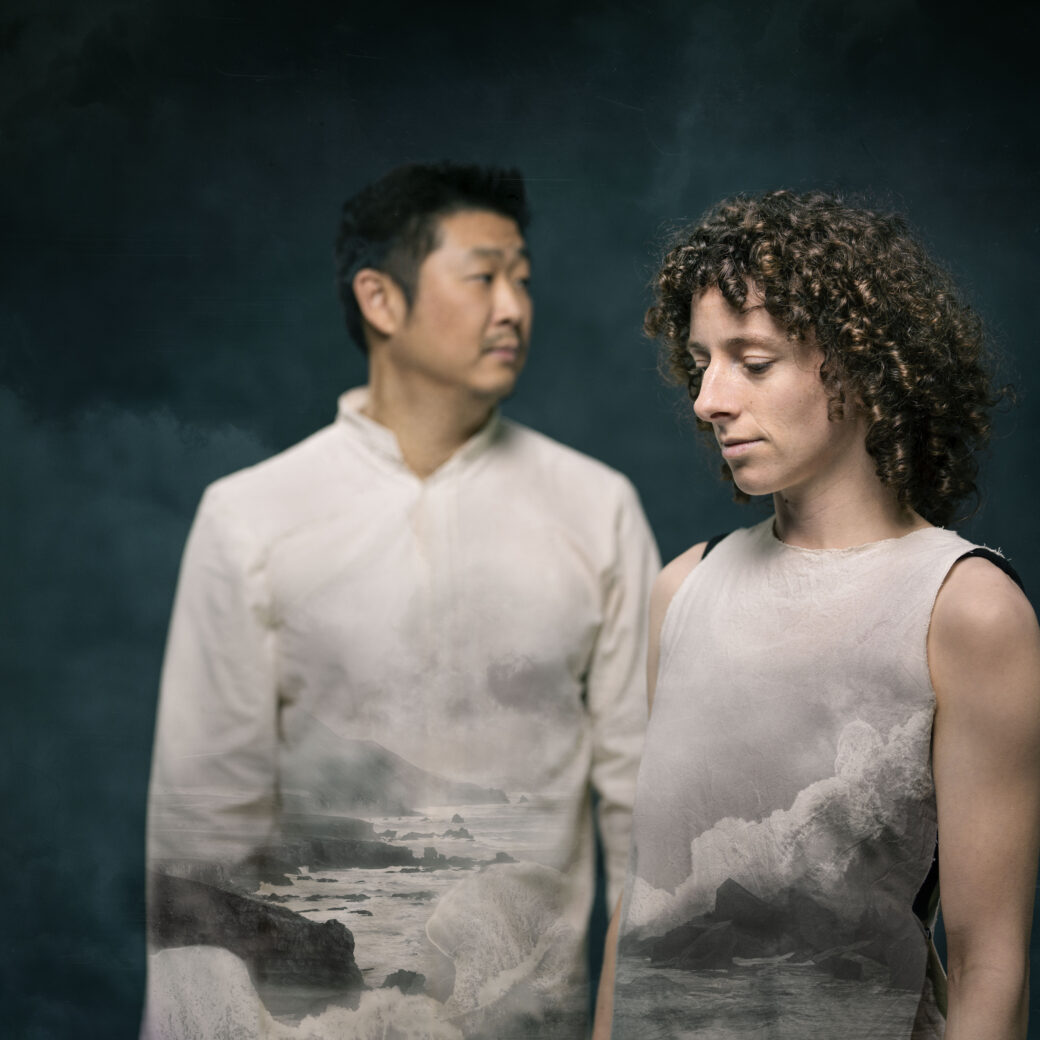
Forging a musical language entirely their own, Where Water Meets (Yyan and Emily) dissolve the boundaries between chamber music, contemporary folk and musical traditions from around the world. Violin, viola, guitar and voices are joined by cello, double bass, piano and banjo, alongside eel-skin instruments, kayamb percussion, Blu-Tack violin and alternate tunings to create a textural tapestry full of unexpected timbres and intricate musical detail.
Can you introduce Where Water Meets and tell us about the idea that inspired the work?
Where Water Meets are a Tasmanian-based chamber-folk ensemble blending folk, world and classical traditions. Lead by co-composers Emily Sheppard (violin/viola/vox) and Yyan Ng (guitar/vox/shakuhachi), they perform with a virtuosic string trio and are touring their second album, ‘Ashore all to pieces’ nationally and internationally in 2027. Their music explores many facets of loss and catharsis, inspired by stories of living in remote wilderness. Blending harmonic palettes of Western Classical music with elements of Celtic folk, Afro-groove, Japanese, and Carnatic traditions, you will be taken on a cinematic journey through Tasmanian wilderness.
Ashore, all to pieces is an immersive chamber-folk album about what carries us through longing, loss and regret. Drawing on remote places as emotional landscapes, the music is anchored in Tasmanian stories, wilderness and place, unfolding from moments of intimate reflection into expansive, emotionally intense orchestral soundscapes. The album is inspired by the stories we carry, the poetry of Rumi, New Zealand playwright Violet Targuse, and John Cook’s memoir The Last Lighthouse Keeper.
Since releasing River Islands during the COVID lockdowns of 2020, we’ve spent the last six years deepening our collaborative composition. We’ve gone down rabbit holes pushing our harmonic language to its extremes, developing our sense of time and phrasing, and furthering our textural explorations. From Honkyoku to Maloya to Malian kora music, we’ve been learning about very different relationships to rhythm and time, developing our own sense of both body-groove and breath-based phrasing.
We’ve spent a lot of time working with string ensembles and learning how to expand our music into larger chamber textures, while continuing to explore the textural extremes of our instruments through scordatura and open tunings, the polycorde bow, violin preparations (Blu-tack), and contact mic recording. There are traces of djent and metal in there too, translated onto acoustic strings. Somewhere along the way we became completely fascinated by eels, building instruments from eel skin and creating a whole show around their extraordinary migrations with eel scientist Malcolm Johnson. You can hear these instruments on Wanting Days.
What different artistic practices, perspectives or creative approaches come together in this performance?
Where Water Meets are an intercultural chamber ensemble blending folk, world and classical traditions. They write music that is evocative, energetic and reflective, shaped by Tasmanian land and seascapes. Moving between numinous soundscapes and driving polyrhythms, their music blends harmonic palettes of Western Classical music with elements of Celtic folk, Afro-groove, Japanese, and Carnatic traditions. For this album launch, we will be playing with Cellist Monica Myung. This album is inspired very much by a lot of different world and folk traditions,
We explore concepts of space or “Ma” and traditional Japanese Honkyoku from the Shakuhachi tradition, Reunion Island Maloya groove, Celtic tune music, our own harmonic language.
What can audiences expect to experience when they come to see Where Water Meets?
Hopefully musically inspiring, and emotionally moving.
Is there a particular moment in the performance that you’re especially excited for audiences to experience?
Looking forward to working with Cellist Monica Myung and the student string orchestra.
What do you hope audiences take away from the work?
We hope to bring people closer to Tasmanian Landscapes and stories, along with inspiring people to explore different musical traditions.